
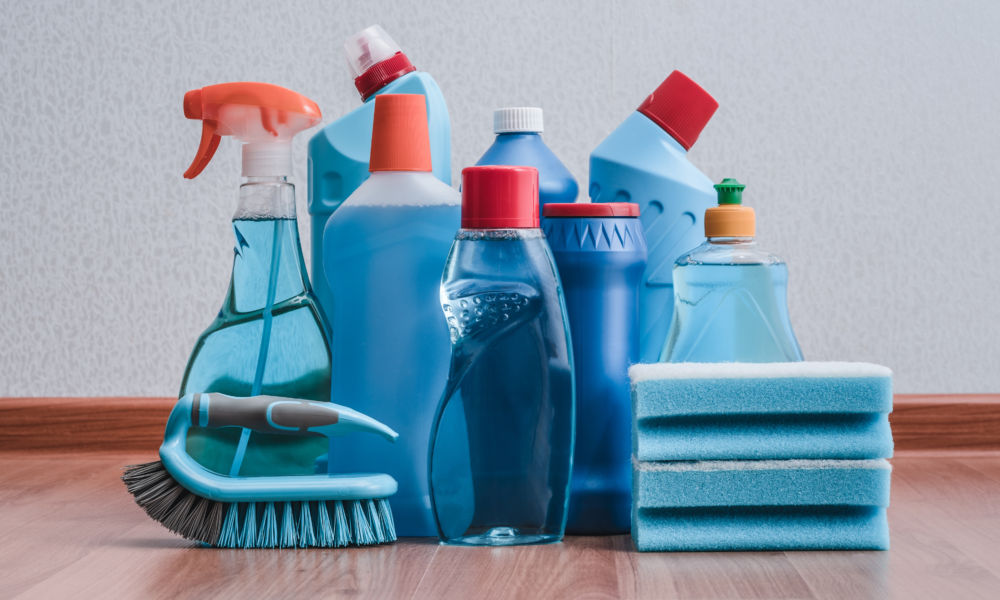
Many of us reach for strong cleaners out of habit, especially in the bathroom. They work, but they can also mean harsh fumes in a small room, products to keep away from children and a cupboard full of half-used bottles. The good news is you can keep a bathroom clean with far fewer chemicals. Here’s how to make the change safely and practically.
Why cut back?
Fumes in a small space
Bathrooms are small, closed rooms. Many cleaners advise using them only with good ventilation, which isn’t always easy when the only window is tiny.
Safety at home
Strong cleaners need careful storage away from children and pets. Fewer products means fewer risks.
Residue and waste
Products that aren’t rinsed off properly can leave a film on surfaces, and every bottle adds to household waste.
If you still use strong cleaners
There’s no need to throw everything out today. If you use them, use them safely:
- Read and follow the label, including any advice on gloves and ventilation.
- Never mix products. Bleach combined with ammonia or acids such as vinegar can release harmful gases.
- Keep them in their original containers, up high or locked away.
- Rinse surfaces well afterwards.
Simple swaps that work
Shower glass: water and a purpose-made sponge
For regular soap scum and light mineral marks, plain water and the right sponge do most of the work. Our Shower Screen Cleaner Sponge is designed to clean shower glass with just water: wet it, wipe and rinse.
Stubborn mineral spots: diluted vinegar
Equal parts white vinegar and warm water helps loosen limescale. Wipe it on, wait a few minutes and rinse well. Keep it off natural stone.
Tiles and grout: bicarb soda paste
A paste of bicarb soda and water with a soft brush helps on grout. Rinse thoroughly. Keep it off shower glass, as it’s mildly abrasive.
Drying: squeegee and microfibre
Drying surfaces after a shower prevents most new marks, which means less cleaning overall.
How to make the transition
- Start with one job, such as the shower screen, and switch it to a water-only routine.
- Add a quick weekly wipe so build-up never gets heavy enough to need strong products.
- Improve ventilation: run the exhaust fan and leave the shower door open after use.
- Use up or safely dispose of products you no longer need, following your local council’s advice on household chemicals.
- Patch-test any new method on a small hidden area first, especially on coated, tinted, frosted or acrylic screens.
Final thoughts
A safer bathroom doesn’t need a special product. It needs a few good habits and fewer bottles under the sink. If you’d like to start with the shower screen, the Shower Screen Cleaner Sponge lets you clean the glass with just water.

