
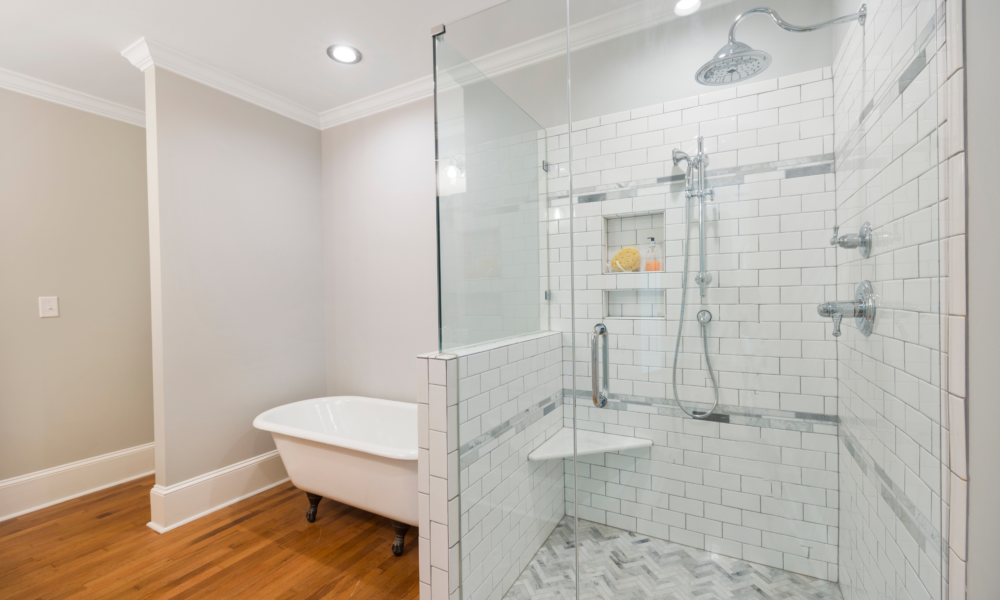
Limescale on shower screens is a common problem, especially in hard-water areas like Perth. It shows up as cloudy or chalky marks that make the whole bathroom look dull. It’s much easier to prevent than to remove, so here’s a practical routine to keep it under control.
What is limescale?
Hard water contains dissolved minerals, mainly calcium and magnesium. When water droplets dry on your shower glass, those minerals stay behind. Shower after shower, they build into a white, crusty layer, often mixed with soap scum.
Why prevent it?
- New marks wipe off easily. Old build-up takes far more time and effort.
- Heavy deposits make glass look permanently cloudy.
- Over time, minerals left on glass for long periods can etch the surface, which no cleaning can undo.
Step-by-step prevention
1. Dry the screen after each shower
This is the single most useful habit. Run a squeegee down the glass, then catch drips at the bottom with a microfibre cloth. No water left to dry means no new minerals left behind.
2. Give it a quick weekly wipe
Once a week, wet the glass and a sponge with plain water and wipe in firm, even strokes, then rinse and dry. Our Shower Screen Cleaner Sponge is designed for this and works with just water, so you can even do it while you shower.
3. Consider a protective coating
Water-repellent glass coatings help water bead and run off, so fewer droplets dry on the glass. Apply them only to fully clean glass, reapply as directed, and check with your installer first if your screen has a factory coating.
4. Treat the water
If your water is very hard, a shower filter or whole-of-house water softener can reduce the minerals reaching your screen. Speak to a licensed plumber about what suits your home.
5. Use vinegar now and then
For occasional stubborn spots, wipe on equal parts white vinegar and warm water, leave it for a few minutes and rinse well. Keep vinegar off natural stone and never mix it with bleach.
More tips
Keep a regular schedule
Pick a day each week for the quick wipe so it becomes routine.
Ventilate
Run the exhaust fan or open a window during and after showering, and leave the shower door open so the cubicle dries faster.
Planning a new screen?
If you’re renovating, ask your installer about glass with a factory-applied protective coating, and how to care for it.
Removing existing limescale
If your screen is already cloudy, start gently:
- Wet the glass and work over it with a water-only sponge in small sections. Heavy, long-term build-up can take a few passes or a few sessions.
- Use diluted vinegar on spots that won’t budge.
- Rinse and dry thoroughly.
Never use sandpaper, steel wool or scouring powders on glass. They leave fine scratches. Always patch-test first, and take extra care on coated, tinted, frosted or acrylic screens.
Keep limescale under control
Prevention comes down to drying the glass, a short weekly wipe and good ventilation. If you’d like a simple tool for the weekly wipe, the Shower Screen Cleaner Sponge is a reusable 2 pack that cleans shower glass with just water.

