
Hard water stains are a common nuisance on shower screens, windows and glass tabletops. They form when water with a high mineral content, mainly calcium and magnesium, dries on the glass and leaves a chalky white residue. Removing them takes effort, but preventing them is mostly a matter of a few quick habits.
Understanding hard water stains
Every drop of hard water that dries on glass leaves a tiny ring of minerals. One drop doesn’t matter, but hundreds every day soon turn into a cloudy film. In bathrooms, soap scum bonds to those minerals and makes the haze thicker. Outside, garden reticulation and rain splashes can leave the same spots on windows.
8 tips to prevent hard water stains on glass
1. Dry glass soon after it gets wet
Squeegee the shower screen after each shower and wipe up splashes on glass tables. If water doesn’t sit, minerals don’t get left behind.
2. Consider a water-repellent coating
Glass coatings help water bead and run off. Apply them only to fully clean glass, reapply as the instructions say, and check with your installer before using one on a screen with a factory coating.
3. Look at water treatment
In very hard-water areas, a shower filter or water softener can reduce the minerals in your water. A licensed plumber can advise on what suits your home.
4. Keep the bathroom ventilated
Run the exhaust fan or open a window so the room dries faster. Leave the shower door open after use.
5. Clean glass weekly
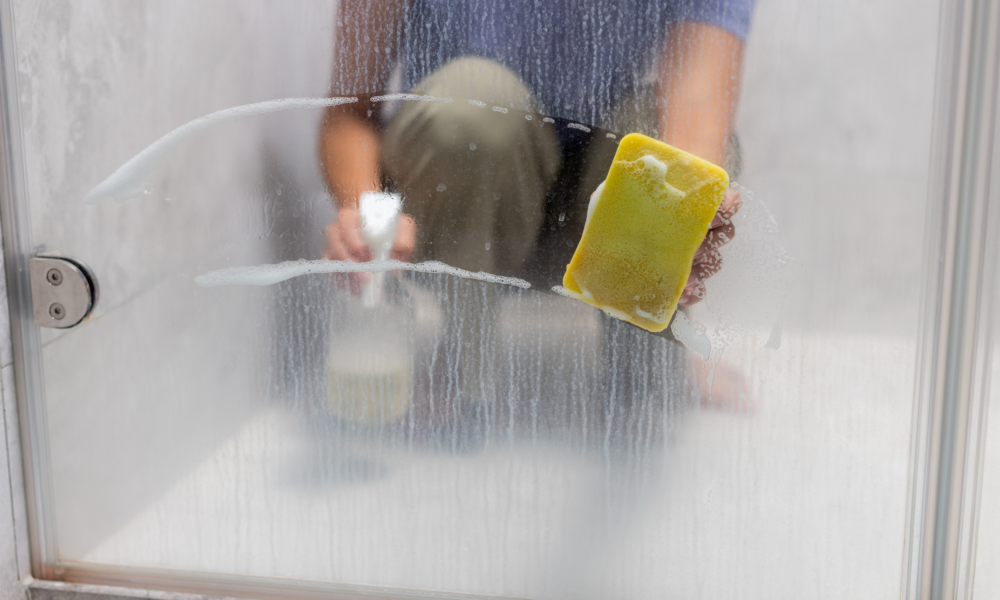
A short weekly clean stops stains building up. On shower glass, wet a sponge and the glass with plain water and wipe in firm, even strokes, then rinse and dry. Our Shower Screen Cleaner Sponge is designed for this and works with just water.
6. Use vinegar for occasional stubborn spots
Mix equal parts white vinegar and warm water, wipe it on, leave it a few minutes, then rinse well. Keep it off natural stone, window frames with sensitive finishes and nearby plants, and never mix it with bleach.
7. Check where your water lands
Adjust garden sprinklers so they don’t hit windows or glass balustrades, and move pot plants you water near glass doors.
8. Finish with a dry polish
A clean, dry microfibre cloth removes the last streaks and leaves no water to dry into spots.
What to avoid
- Scourers, steel wool or gritty powders on glass. They can leave fine scratches.
- Leaving cleaning solutions to dry on the glass.
- Mixing cleaning products.
Patch-test any new method on a small hidden area first, and take extra care with coated, tinted, frosted or acrylic glass.
How a water-only sponge helps in the shower
The shower screen gets wet more often than any other glass in the house, so it’s where stains build fastest. A water-only sponge kept in the shower makes the weekly wipe easy, with no products to buy or rinse off.
Protect your glass today
Dry the glass, wipe it weekly and keep stronger cleaners for stubborn spots. If you’d like an easy tool for the shower, try the Shower Screen Cleaner Sponge, a reusable 2 pack that cleans glass with just water.

